

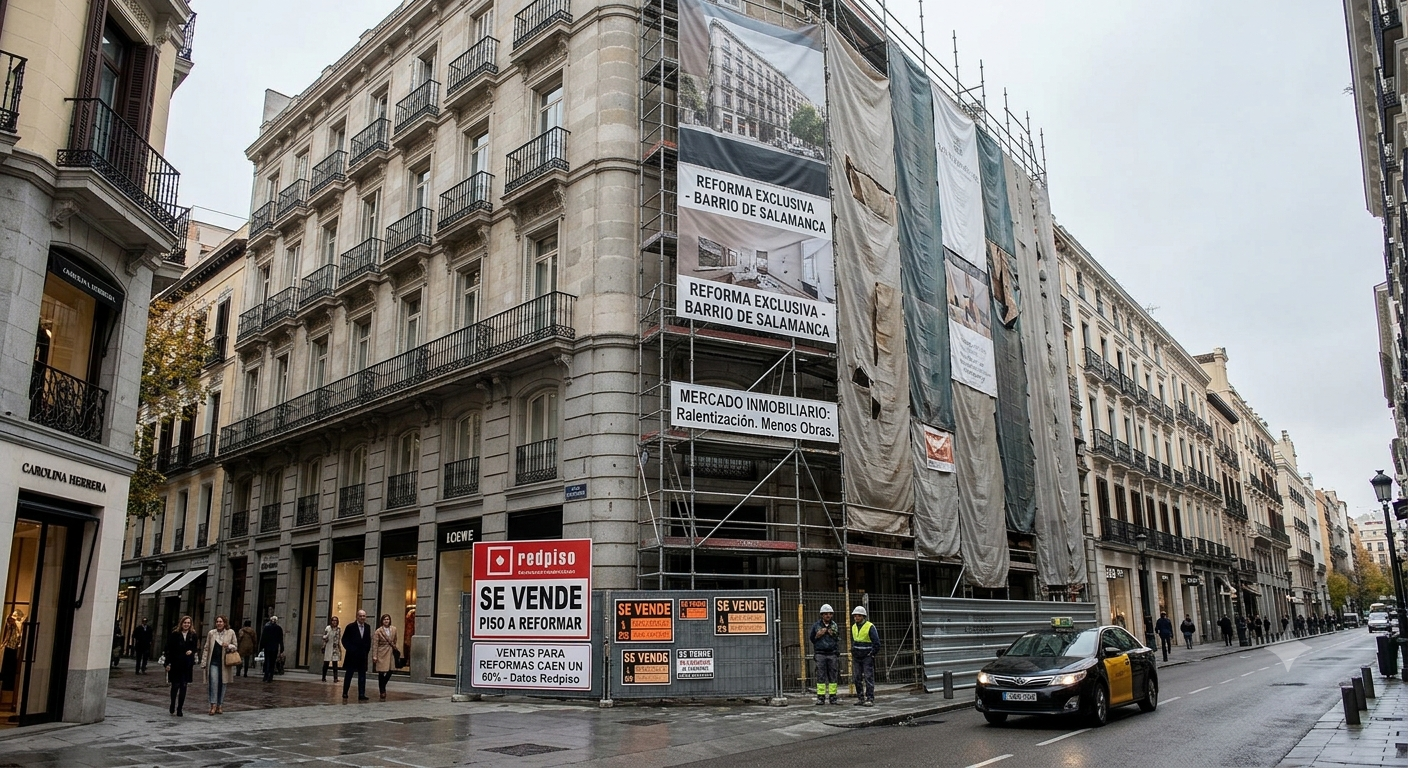
Sales for renovations fall by 60% in the Salamanca district
The luxury real estate market in Madrid is undergoing a cyclical shift. After more than five years of strong expansion, the Golden Mile (especially the Salamanca district) is showing clear signs of slowing down. The sale of properties for renovation and resale has fallen significantly, by up to 60% in some areas, according to data from Redpiso.
From the investment boom to a more selective market
Over the past few years, investment funds and large investors fueled a veritable frenzy to acquire properties in prime Madrid areas (Recoletos, Castellana, Lista, etc.) with the aim of renovating and quickly selling them. This dynamic generated a price surge that many experts described as a bubble in certain segments.
However, the beginning of 2026 marked a turning point. Daniel Samper, a Redpiso franchisee in the Salamanca district, explains that after a somewhat slow first quarter, there was a “ very considerable drop ” in these types of transactions. The net profitability of these investments has fallen to 51% , and the volume of sales in premium areas has dropped by more than 62% compared to the peak years.
Why is the market slowing down?
Several factors explain this correction:
- Accumulation of renovated stock : Many properties renovated by investors are not being absorbed at the expected rate.
- Rising costs : The increased cost of construction materials and the shortage of skilled labor have driven up the budgets for high-end renovations.
- Higher entry prices : The price per square meter without renovation has continued to rise, reducing the profit margin.
- Greater selectivity of buyers : Investors scrutinize each transaction and show greater sensitivity to price.
This is causing large investors, who played a key role during the expansionary phase, to lose interest. As a result, a normalization of prices is expected in the coming months.
The new protagonists: the private individuals
The baton is now being passed to high-net-worth individuals , both domestic and foreign. They are no longer looking to buy up properties quickly (buy-renovate-sell fast), but rather to acquire homes to adapt to their needs and enjoy them long-term.
This change in profile is helping to keep the market active, albeit at a slower and more realistic pace.
Luxury apartment building on Jorge Juan Street, in the Salamanca district. (Photo: Tania Sieira)
Opportunity or risk?
For buyers, especially those looking for a primary residence, this correction can translate into more reasonable prices and greater negotiating power, particularly for properties that still require renovation.
Conclusion: towards a more mature market
Madrid has not lost its appeal. It continues to lead the luxury segment nationally and attracts international fortunes. However, the market is transitioning from runaway growth to a phase of greater maturity and selectivity .
Investors who know how to adjust expectations and prices will have opportunities, while individuals looking for quality and prime location may find an interesting time to enter.
Are you thinking of buying or selling in the Salamanca district or other premium areas of Madrid? The landscape is changing. The key now is to act with up-to-date information and a realistic approach.
What do you think? Do you believe this correction was necessary or is it just a temporary adjustment?

 English
 French
 German
 Russian
 Spanish