

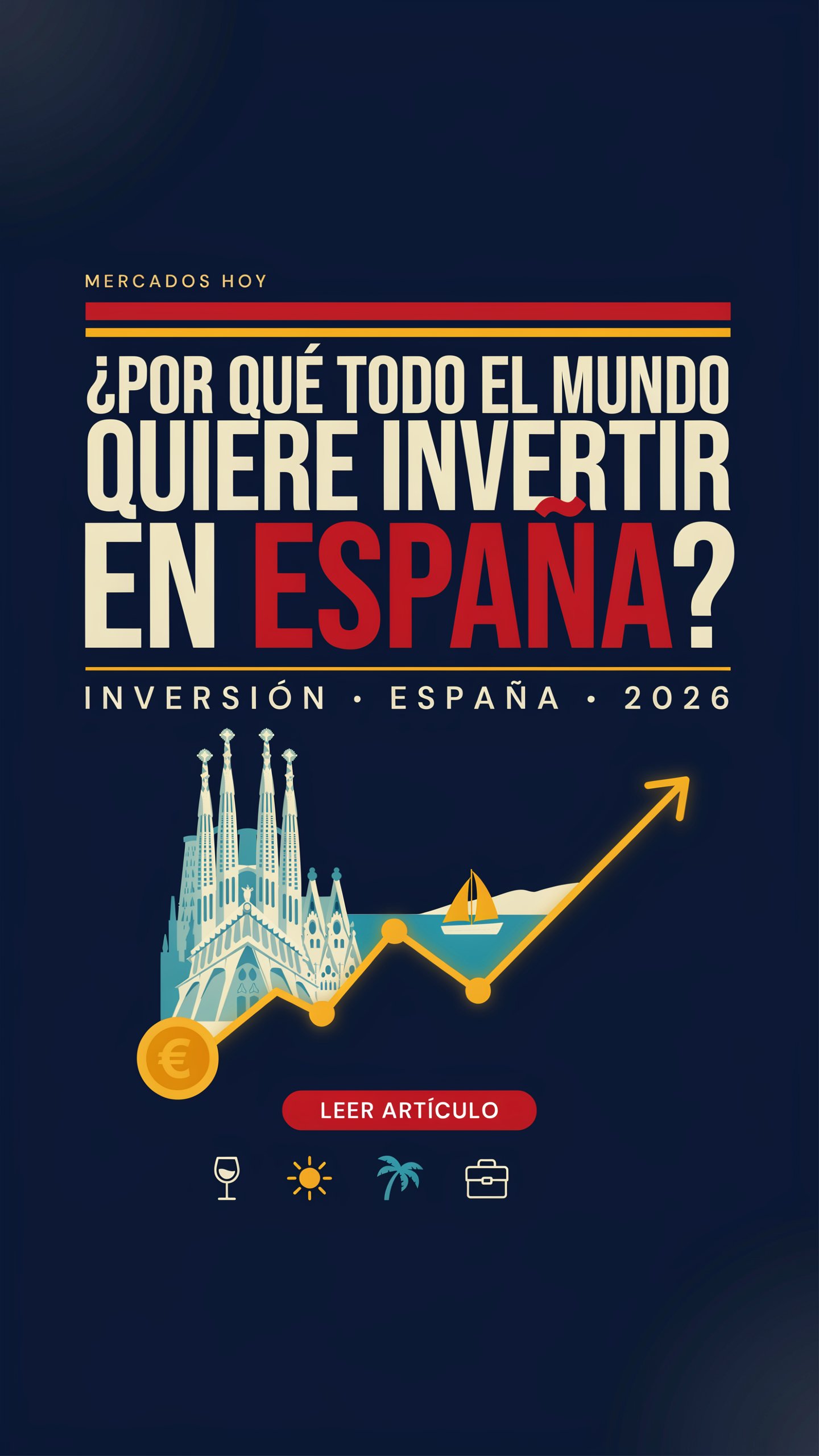
The real estate sector breaks historical records
If you pay attention to the business world, you'll know that the real estate market is an excellent barometer of a country's economic health. And right now, Spain's market is booming… but in a good way.
Major international asset managers, with giants like BlackRock leading the way, are being blunt: Spain has become "Europe's star" for real estate investment. What exactly is happening, and why are investors so focused on our country? We'll tell you all the key factors behind the current boom .
A breathtaking first half of the year: More than 10 billion euros
The numbers don't lie. According to the latest reports from leading global consultancies such as JLL, the volume of real estate investment in Spain has exceeded 10 billion euros in the first half of the year .
To put this into perspective:
- This represents a year-on-year growth of 50% compared to the previous year.
- It consolidates Spain as one of the three most attractive markets in the entire Eurozone.
- Analysts are already predicting that, if things continue this way, the historic barrier of 20 billion euros in a single year could be broken for the first time.
The 3 key factors that explain this phenomenon
Why this sudden and voracious appetite for Spanish real estate? There are three main factors that explain it:
1. The return of international capital
After a period of global caution due to rising interest rates in previous years, international money has begun to flow again. Investment committees see Spain as a perfect combination: legal certainty, stability, and more attractive returns than those of traditionally strong markets like Germany or France.
2. The "Living" sector and tourism rule
People are no longer just looking for the typical retail space or office in the city center. Money is moving towards where the real demand is.
- The "Living" sector: Student residences, coliving and professionally managed rental housing (Build to Rent).
- Hotels: Tourism in Spain continues to break records, making hotel assets a very attractive revenue-generating machine for investment funds.
3. The Madrid-Barcelona axis (with new guests)
As usual, Madrid and Barcelona lead the market , capturing over 70% of total investment. However, what's interesting this year is the decentralization: regions like the Valencian Community, Malaga, and the Balearic Islands are attracting an unprecedented volume of capital thanks to their technological and tourism boom.
The fact: After overcoming the macroeconomic uncertainty of recent years, the Spanish real estate sector has not only recovered, but has positioned itself as the favorite refuge for institutional capital in southern Europe.
Conclusion: What does this mean for the individual investor?
When large institutional funds (the "whales" of the market) enter a country so aggressively, they tend to create a ripple effect. The dynamism of the Spanish market confirms that the real estate sector remains one of the best hedges against inflation and a solid source of returns.
The question is no longer whether it's a good time to invest in Spain, but in which city and in what type of asset you are going to put your money.
What do you think of this approach for your blog? If you'd like, we can adjust the tone to be more technical or add a section focused on advice for small investors.


 English
 French
 German
 Russian
 Spanish